UPDATE: Many people after reading this wanted to check if Marit is ok. She is fine – all clear – as I evidently had not made clear enough in the post itself. It was just a scare. Thanks to everyone for your concern.
NOTE: The views expressed here are not necessarily those of anyone else. Also, I’m supposed to be in California this week. Reading this, hopefully you’ll understand why I’m not.
It’s been a scary weekend. On Saturday afternoon, in an increasingly futile attempt to stave off the effects of incipient middle age, I went for a short run. When the sweating, panting mess I so rapidly degenerated into wilted through the front door 20 minutes later, something was wrong, but for a change, not with me. My wife was talking seriously about something on the phone. I could tell she was concerned. My first reaction was that a friend had called for help – my wife is the kind of person people turn to – but as the crashing sound of blood pumping through my ears started to dissipate, I realised she was talking to a nurse about an attack of some kind she had just experienced. Could be anything. Better get it checked out, to be sure, was the advice.
So I threw some clothes on and we jumped into the car, talking logistics all the way to Accident & Emergency: a babysitter to stand down, a restaurant booking to cancel, friends to disappoint. We parted at the hospital, and I took the girls home for dinner. Two hours later, a phone call that made the room spin: my wife was undergoing emergency neurological tests and would be under observation for 72 hours. My nervousness must have communicated itself to the children who, without me speaking, started envisioning a worst case scenario.
Cue internal chaos. Packing a bag, cooking food to take, trying to think straight and not let fear take hold. Dropping things off at the hospital a second time was worse, squalid logistics getting in the way of managing the children’s and our own feelings to any degree of satisfaction.
I love my wife. Being married to her defines who I am more than any other choice I have made in life. The goodness inside her sustains me and the thought that anything was so threatening to her well-being is monstrous. And in those fearful hours, all I had to cling on to was that identity. Four words, “I am her husband”, would tell anyone everything they needed to know about my right to access, to information, to respect. When suddenly the life my wife and I have built together seemed under any kind of threat, the monument of our public commitment to each other was the main thing to hold on to.
Very often, critics of the notion of same-sex marriage seem to feel it can be reduced to something empty, as though symbolism carries no weight. As though legal constructs around civil partnerships, common law marriages, tax codes, inheritance rights and so forth suffice. All of that misses what’s important.
This week, one man’s political activism against same-sex marriage has been held up as defining his ability to lead Mozilla. There have been no complaints (none whatsoever) about his behaviour, and the oganisation he founded has one of the most inclusive and open cultures of any I have ever been associated with. But it seems that Brendan Eich, for reasons he chooses to keep private, opposes equality for same-sex couples. I think he is wrong to do so. And it is a wrongness that isn’t theoretical or abstract, it’s a visceral one. Marriage is not about the easy things, it’s about the hard things. Denying the support of the institution of marriage to same-sex couples is denying many people the very thing they need to lead a fulfilling life.
You or I may be troubled by Brendan’s personal support of prop 8, but there are many issues of ethical substance that the Mozilla community – any community – is capable of disagreeing on, and remaining a coherent community, including some that in 2014 could be regarded as even more important than that of same sex marriage (importance in some absolute terms – it is also possible for me to imagine there are many people for whom this is the most important issue of the day). And I feel I (and many other Mozillians), feel the need to clarify where we stand.
So, why does Brendan’s donation matter so much to so many? I suspect it’s this: the issue of same-sex marriage has become a litmus test in north America. It defines whether you are red or blue. I grew up in a radically left-wing but somewhat socially conservative city. One’s stance on same-sex marriage defines little else about how someone thinks for me, but I realise that in other cultures, it might signal a great deal. And if you’re gay, lesbian or bisexual, it might seem to define how they think about you. For constructive thoughts from such a perspective Christie Koehler’s blog on the topic is recommended.
Let’s get this on the table. I do not wish to engage in Whataboutism. The notion that you cannot raise an ethical objection in one field without philosophical clarity in all others is, of course, unhelpful. But we should also recognise that social attitudes change. That this is normal. That at any one time, there will be a plurality of views on issues that in hindsight, appear open and shut. The language of my grandparents’ generation wouldn’t pass muster these days. As recently as the 1970s, there were open campaigns for paedophile rights in the UK. In the 1980s casual racism was celebrated in light entertainment on television. And to this day gender equality is very obviously a mess and not regarded as a mainstream issue worthy of similar activism as same-sex marriage.
One example that will appear trivial to many: I am a vegetarian. When people learn this, they typically have one of three reactions: to tell me how little meat they eat themselves, to tell me how they couldn’t possibly live without meat, or to ask me how long ago and why I became a vegetarian. The answer to the latter is since I was 13 or 14, and that for as long as I could remember, it always seemed to me obviously wrong to cause distress to and kill animals needlessly (more or less). I do not suspect I would win many converts if I became more militant in my vegetarianism, although I am always happy to engage with people that wish to discuss it, both seriously and flippantly. But I need to be accepting of the wider moral context. Not many people share my perspective. Regarding it as defining of someone’s character is futile.
What about issues we can all agree on? How many Mozillians supported Obama in 2012, even after it became clear that drone strikes were a chosen instrument of foreign policy for his administration? Many Mozillians had “Obama 2012” stickers on their laptops even as mechanised death rained down from the sky on young children born in the wrong part of the world. How will we view the Obama era in 20, 30 years’ time? A great man compromised by circumstance? The lesser of two evils? A leader who guaranteed his own nation’s security whatever the price? Will Americans view it differently to non US-nationals? There’s debate to be had there. And however strongly I feel about same-sex marriage, I am capable of feeling even more strongly about the 174 Pakistani children reported killed in drone strikes before Obama’s reelection. Should we judge Obama through the lens of drone strikes? Should I decide whether or not I will work with someone through the lens of their support for a president who himself supports drone strikes? I believe that would be self-righteous, not righteous. It would be a failure to understand the choices they feel they have in front of them. It can seem absolutely wrong and yet part of a complex picture.
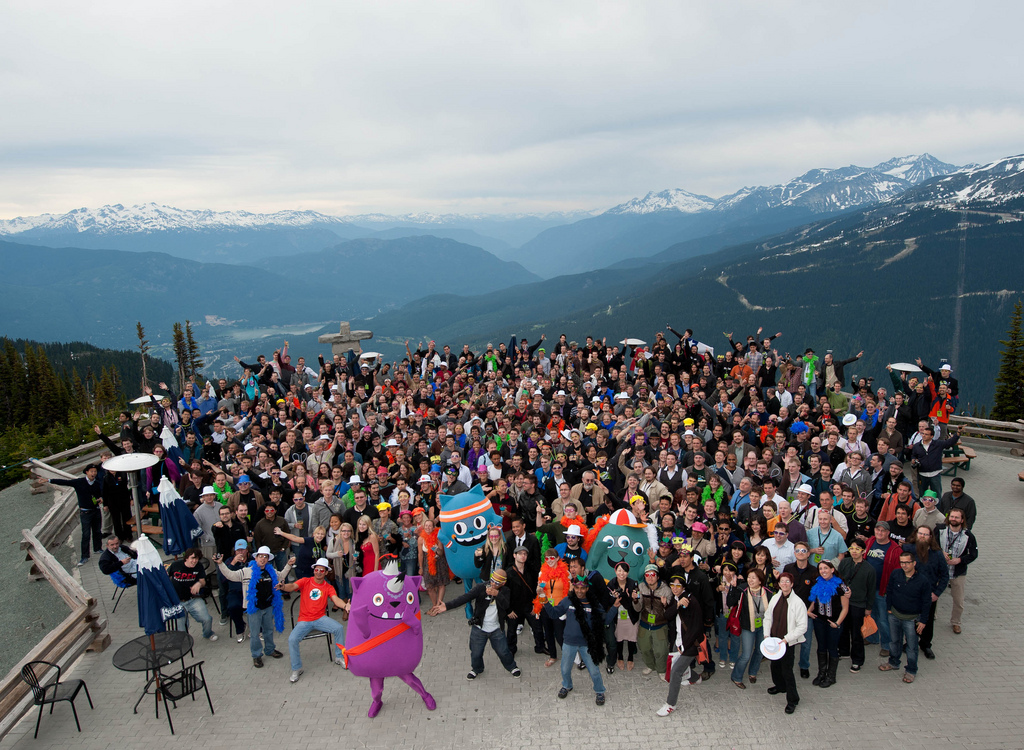
I feel very proud to be a Mozillian and very fortunate to work full time for the project. This week, a number of individuals who are as fortunate as I am in this regard called on Brendan to step down as CEO because of his personal political activism against same-sex marriage. They are to be applauded for their courage: being prepared to take a stand, big or small, on a matter of conscience defines social progress. The now unacceptable attitudes of previous decades I mentioned above have, in part, been modernised by such activism. But I am not prepared to allow my association with the project be defined by this issue.
We have what unites us: the work of Mozilla. I feel on safe ground in declaring the Internet is the greatest change to the world in our lifetimes. Its effects are widespread, and unpredictable. And must be directed to the public good. Do we want an instrument of progress, of participation, or of passive consumerism? Do you share the belief that connecting economies, societies, and individuals on their own terms has great potential for humanity? Do you believe that this needs protecting, nurturing? That is what defines us, what gives us clarity of purpose. Not drone strikes, not vegetarianism, not same-sex marriage, and even as we frequently find commonality of views within our community on many of these topics, we must also accept there will be divergence. Like many Mozillians, I have aspirations that the open Web will improve the world and the situation with respect to many of the issues that I hold dear. But I don’t believe it is reasonable to demand that everyone else who believes in the open Web must have the same aspirations for it. We can, however, continue to contribute to the great culture of this community: a culture of intellectual curiosity, of respect, of inclusiveness (as Lukas Blakk amongst others is doing), and, in other weeks at least, of fun.
Mrs Finch is home now, recovering, worst-case scenarios (I won’t elaborate here) dismissed. She’s fine.
The night we met, a mutual friend took me to one side and told me, “forget about her Patrick, she’s out of your league”. I’m just hoping she never realises. What is inevitable, however, is that we will face a more serious situation one day. Every couple will. And when they do, I believe that they should be able to do it together, as their partner’s wife or husband.

 From Åkerö